The legal cannabis industry operates under rigorous compliance requirements that vary from state to state. Each market establishes its own regulatory framework, including mandating a specific track-and-trace software that operators must use to report data. From planting to point-of-sale, every plant, product, and transaction must be documented and fully auditable.
State-mandated systems like METRC are designed primarily for regulatory compliance and basic data reporting, but they offer limited operational functionality for managing the daily operations of a cannabis business. This is where more robust, seed-to-sale software providers come into play. Platforms like Canix integrate with systems like METRC and BioTrack, while providing significantly more value through additional features and integrations, automation, analytics, and hands-on customer support that help operators run more efficient and profitable operations.

Software systems like METRC and BioTrack give regulators real-time visibility into licensed cannabis operations to support compliance and public safety. They require detailed reporting at every stage of the supply chain to prevent diversion into the illicit market and to ensure products can be traced back to their source if there's a consumer issue. While that level of traceability is essential, these systems can be cumbersome and time-consuming for operators to use. As a result, many cannabis businesses turn to third-party seed-to-sale platforms that:
For many operators, third-party platforms become the central hub of their business, managing compliance while driving efficiency and growth.

In response to the heavy compliance burden placed on cannabis operators, a wave of tech companies have built software platforms designed to go beyond state reporting systems. While compliance integrations are the baseline requirement and essential given the high stakes of maintaining a hard-earned license, today's leading seed-to-sale providers differentiate themselves by the additional value they bring to the table. Businesses need more than just reporting tools; they need systems that help them run smarter, more efficient operations. It's this added layer of operational intelligence that sets third-party platforms apart from state-mandated systems, and from one another.
Canix is an all-in-one cannabis ERP designed for cultivators, manufacturers, and distributors that want more than just compliance reporting. Trusted by hundreds of facilities across the U.S., Canix streamlines workflows, automates state reporting, and delivers real-time visibility into inventory and business performance. With Silicon Valley DNA, Canix brings a strong product and engineering focus to the cannabis industry, building modern, scalable tools that help operators run more efficient, data-driven operations.
Key Capabilities:
Canix is often selected by operators who want a single platform to manage compliance and broader business operations without stitching together disparate tools. With strong accounting and finance capabilities, including automated and manual cost tracking, detailed lookback reports and activity history, Canix substantially reduces the time spent on accounting and financial reporting. In recent news, Canix announced the acquisition of Trym, signaling a push to expand its capabilities in mobile and cultivation workflows. With this recent acquisition, Canix delivers both end-to-end supply chain coverage and the deep, specialized functionality operators need within each vertical.
.png)
365 Cannabis is a cannabis industry dedicated ERP platform, built on Microsoft Dynamics 365. Designed to serve operators looking for a highly adaptable, enterprise-grade solution, 365 Cannabis combines native cannabis compliance requirements, with broader benefits of full scale ERP. This foundation makes it a strong fit for those who want solid accounting oversight, more detailed reporting, and easy integration with other business tools.
Key Features:
365 Cannabis is often chosen by larger, multi-entity operators that need stronger financial oversight and want their cannabis software to connect seamlessly with existing Microsoft systems. It tends to appeal to companies with more complex operations, especially those with internal IT support, that value the flexibility and customization a Dynamics-based platform can offer.
Distru is a Cannabis ERP that acts as a central hub for wholesale operations, combining compliance with inventory management, production planning, and built-in CRM tools. One of the largest ERPs in the industry with over $4B in annual GMV passing through their platform, they empower manufacturers, distributors, and brands that need to integrate operations, inventory, production, and sales.
Key Strengths:
Distru is frequently chosen by operators with a heavy focus on cannabis distribution, manufacturing, and wholesale. Distru's built-in CRM tools, order management, and marketplace integrations support brands and distributors handling complex sales and fulfillment workflows.
Flourish Software is a comprehensive seed-to-sale platform built with supply chain management at its core, making it a good fit for vertically integrated operators handling cultivation, extraction, manufacturing, and retail under one roof. Flourish distinguishes itself with strong analytics capabilities, offering cross-functional dashboards designed to deliver actionable insights across every stage of the supply chain.
Key Features:
Flourish is often selected by vertically integrated operators for its integrated modules that streamline operations and reduce complexity across cultivation, manufacturing, and retail. While it provides strong cross-functional visibility, it may not offer the same depth in cultivation-specific tools or distribution-focused workflows as other platforms.
MaxQ Cannabis is a seed-to-sale platform built for cannabis businesses that want stronger financial and operational controls alongside compliance. Built on the Acumatica cloud ERP framework, MaxQ connects cultivation, manufacturing, distribution, and accounting in a single system.
Key Features:
Designed for complex cannabis operations, MaxQ provides an integrated suite that combines accounting, manufacturing, ERP, CRM, and distribution tools in one platform. It's often selected by larger operators that want deeper accounting integration and enterprise-level reporting within their seed-to-sale system.
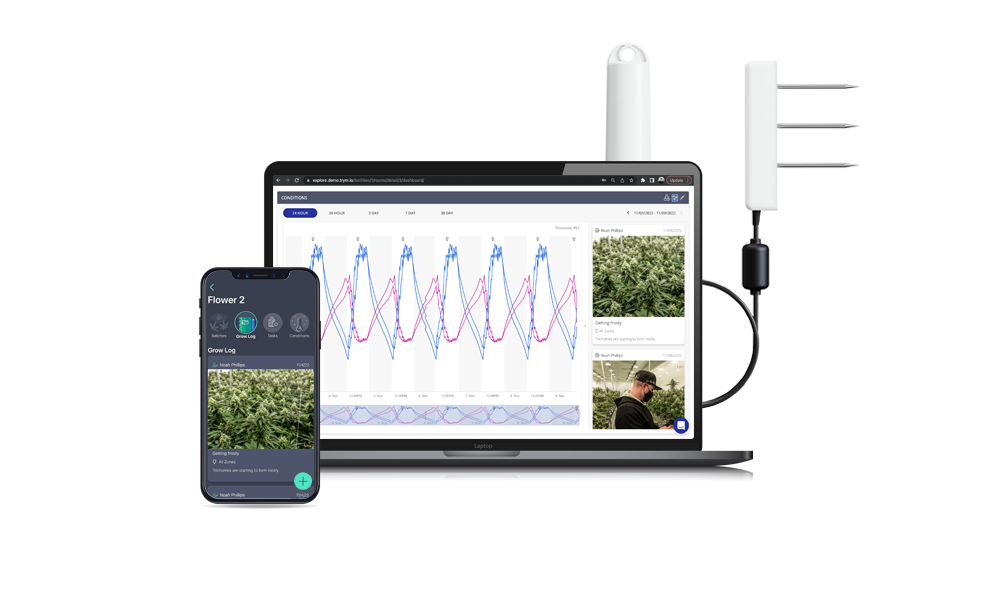
Trym is a cannabis cultivation platform that combines compliance capabilities with advanced grow features such as crop steering, environmental sensor integrations, team management, and yield analytics. By combining compliance data with operational and environmental data, Trym unlocks insights that systems like METRC don't provide.
Key Differentiators:
Trym appeals to operators with a strong focus on cultivation, particularly craft growers optimizing for premium quality flower or specific cannabinoid and terpene profiles. With flexible sensor integrations, detailed harvest analytics, and a direct integration with testing lab platform Confident Cannabis, Trym gives cultivators the real-time insights they need to fine-tune their grow environments, improve consistency, and drive targeted production outcomes.
Choosing the right seed-to-sale platform is not a decision operators make lightly. These systems become deeply embedded in daily operations, from inventory and production to finance and sales. The data structure, team processes, hardware integrations, and compliance reporting all hinge on this foundation, making switching platforms costly and disruptive. For cannabis businesses operating in a competitive environment, selecting software that not only ensures compliance but also supports long-term scalability and efficiency can have a lasting impact on growth and profitability.
When evaluating platforms, multi-state operators in particular should consider:
In a market where margins are tight, the right technology partner doesn't just help operators stay compliant — it helps them build resilient, scalable businesses for the long haul.
What is seed-to-sale software?
Seed-to-sale software is a cannabis-specific platform that tracks every plant, product, and transaction from cultivation through final sale. It integrates with state-mandated track-and-trace systems like METRC while providing additional operational tools for compliance, inventory management, financial reporting, and workflow automation.
What's the difference between METRC and seed-to-sale software?
METRC is a state-mandated track-and-trace system used by regulators to monitor licensed cannabis operations. Seed-to-sale software platforms integrate with METRC and build on top of it, offering more robust operational features like ERP capabilities, analytics, mobile apps, and customer support that METRC doesn't provide.
What is the best seed-to-sale software for multi-state operators?
The best platform depends on your operational profile. Canix, 365 Cannabis, and Distru are commonly used by multi-state operators due to their ERP capabilities, multi-location visibility, and broad compliance integrations across METRC, BioTrack, and CCRS.
Does seed-to-sale software integrate with METRC?
Yes, all leading seed-to-sale platforms integrate with METRC and automate the required compliance reporting, reducing the manual burden on operators while keeping them audit-ready.
How much does seed-to-sale software cost?
Pricing varies by platform and is typically based on facility size, number of licenses, and feature tier. Most providers offer custom pricing — it's worth requesting a demo from your shortlisted platforms to compare total cost of ownership.
Subscribe to our newsletter.


The future of cannabis technology
%20(1).png)
.png)