%20(1).png)
National legal cannabis retail sales fell to roughly $29.1 billion in 2025, the first year-over-year decline since adult-use sales began in 2014. Wholesale prices have dropped 20-32% percent since 2021 as supply has outpaced demand in most mature markets. Salaries across cannabis job categories fell another 4-7% last year, a predictable response to margin pressure that always lands hardest on the largest controllable expense line: labor. Cultivation hiring alone declined nearly 23% in early 2026, even as overtime spending climbed 17% year-over-year, a sign that operators are asking smaller teams to do more rather than expanding headcount.

None of that is a demand problem. It's a maturing market, and a signal that the operators pulling ahead are the ones who have made their cultivation operations more efficient, not just bigger.
For a commercial grow, efficiency starts with visibility: knowing what's happening in every room, on every plant, at every stage, without relying on a whiteboard, a spreadsheet, and whatever your compliance system happens to report. That's the operational foundation cannabis cultivation management software is built to provide.
This article covers what the category actually is, why cultivation is uniquely difficult to manage with generic tools, the features that matter most, and how to evaluate your options, including how Canix's acquisition of Trym has changed what's possible for cultivators who don't want to run their grow and the rest of their business on two disconnected systems.
Cannabis cultivation management software is a purpose-built platform for running the operational side of a commercial grow: plant lifecycle tracking, environmental monitoring, task and labor management, and yield data, all connected to the compliance and business systems around it.
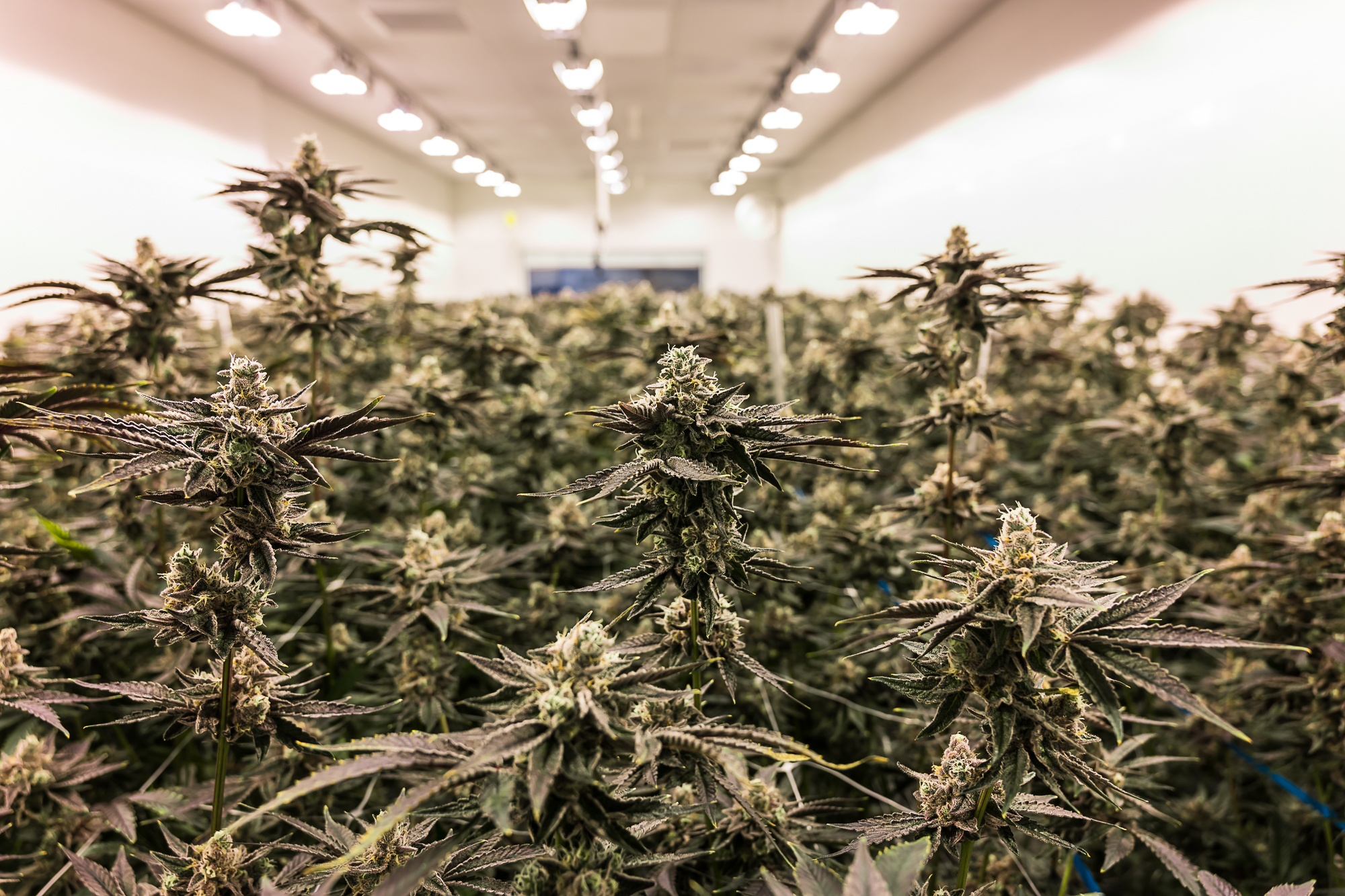
The key phrase is purpose-built. Cultivation isn't like most inventory workflows. A single batch moves through clone, vegetative, flower, harvest, and dry/cure phases, and at each stage the unit of measurement, the compliance requirement, and the operational task all change. Generic software, and even most cannabis ERPs, aren't built with that lifecycle in mind. They can track a SKU. They can't tell you why Flower Room 2's yield dropped relative to last cycle, or notify your team that a feeding task is due today.
Cultivation management software is also distinct from state-mandated seed-to-sale systems like Metrc, though the two are often confused. Metrc exists to give regulators visibility into your operation. It answers a compliance question: can the state verify what happened to this plant? Cultivation management software answers a different set of questions: What condition are my rooms in right now? What does my team need to do today? Which cultivars are actually performing? Metrc keeps your license valid. Cultivation software helps you run a better-performing grow.
Operators who need this category of software include:
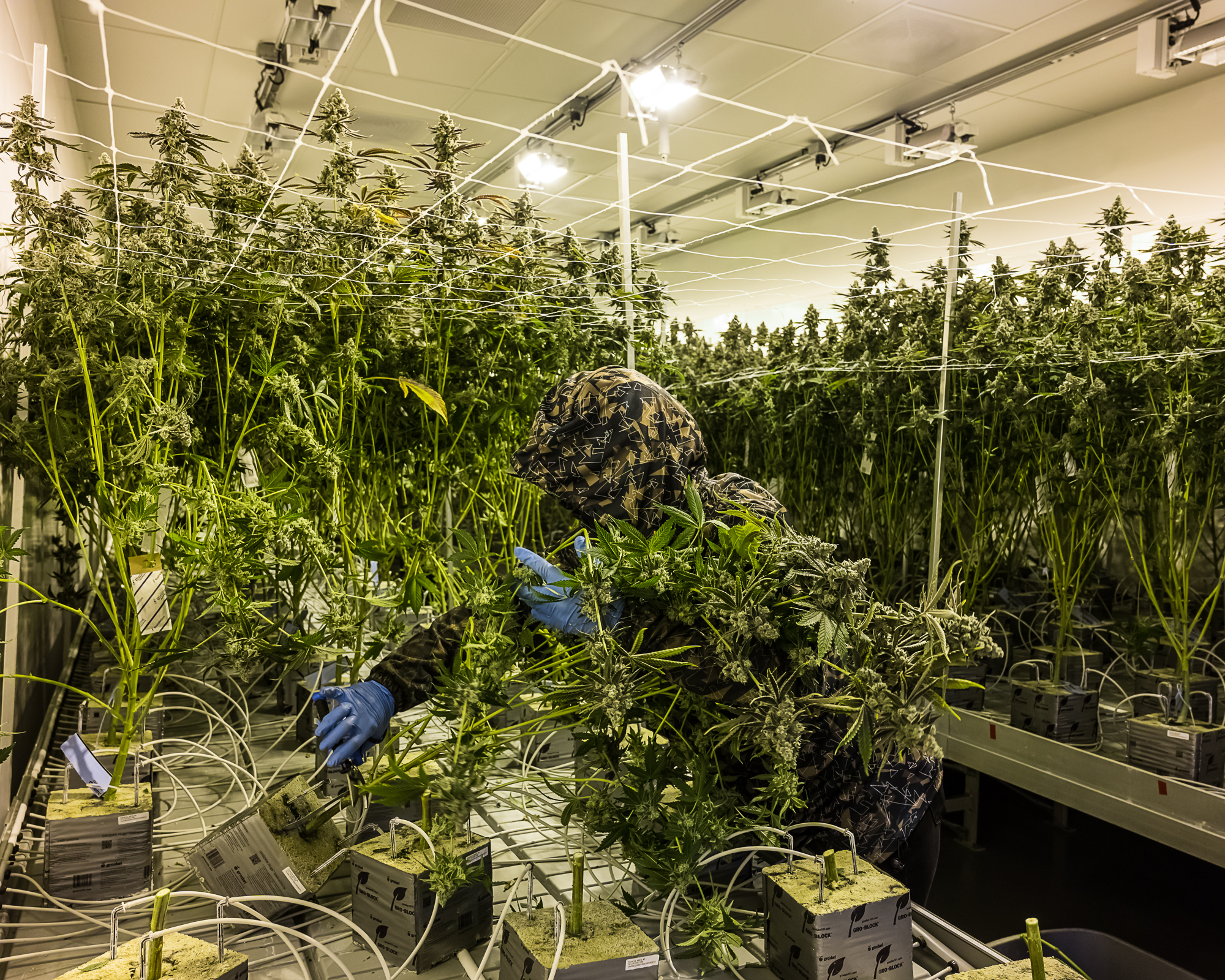
In a market defined by price compression, labor is where operators have the most room to improve margin, and the least margin for error. Recent industry data shows cultivation teams being asked to absorb more work through overtime rather than new hires. Without systemized, repeatable workflows, that pressure translates directly into inconsistent task execution, missed feeding or IPM windows, and specific knowledge that lives in one team member's head instead of in a system anyone can access.
Most commercial grows already have sensor infrastructure tracking temperature, humidity, VPD, and root-zone conditions. Far fewer have that data connected to the plant and task records it should inform. When climate and yield data live in separate systems, the analysis that should be routine, comparing environmental conditions across cycles to explain a yield or quality change, becomes a manual reconciliation project instead of a report you can pull.
Every phase change, harvest, and plant movement generates a Metrc reporting event. When that reporting happens as a separate step after the operational work is done, rather than as a byproduct of it, errors accumulate and staff time goes toward reconciliation instead of cultivation. In a regulated industry, the gap between your internal cultivation records and what's been reported to the state carries real compliance risk, not just an inconvenience.
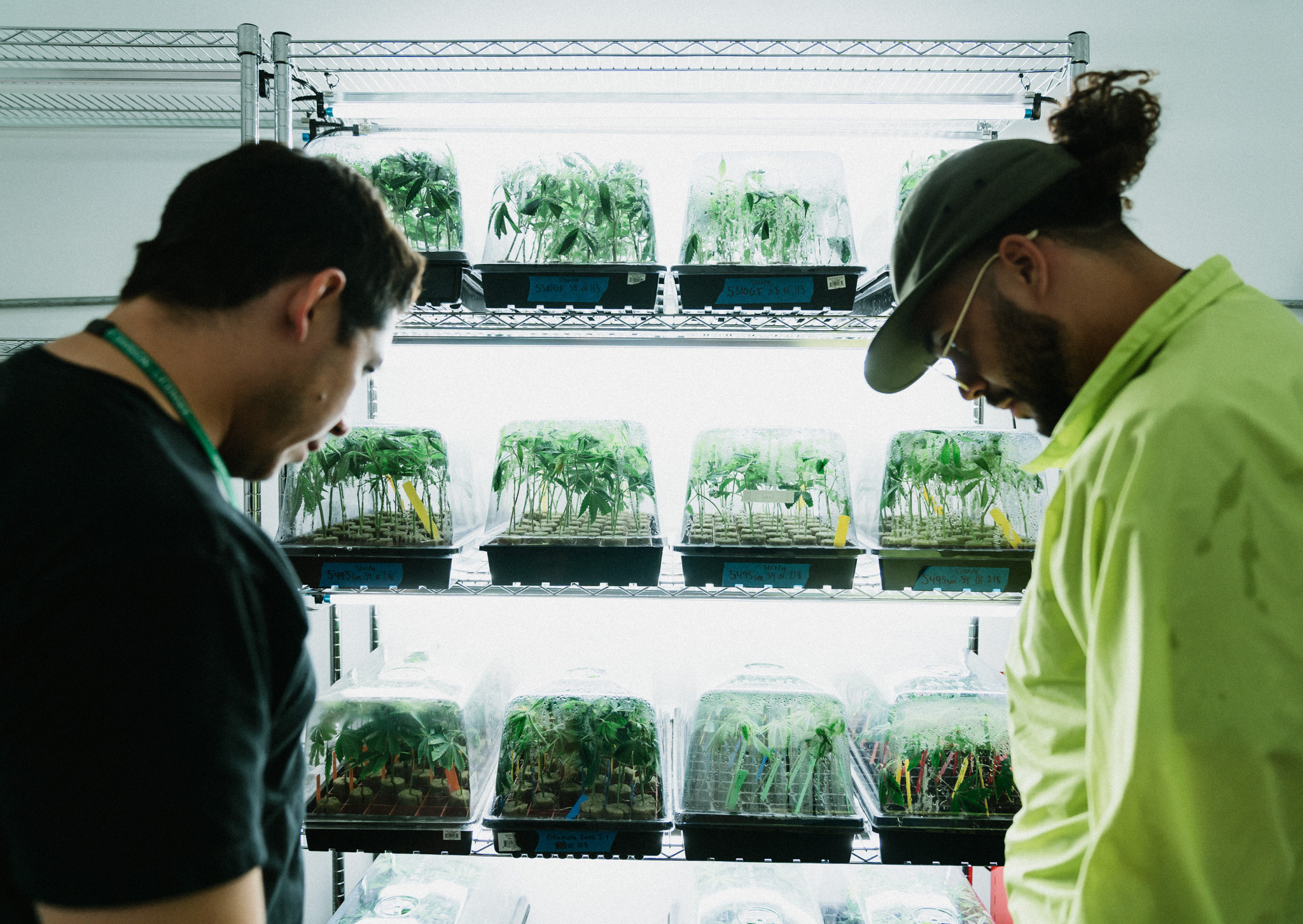
Full visibility from clone or seed through harvest, with phase changes tied directly to compliance reporting rather than handled as a separate task after the fact.
Real-time climate and root-zone data, including temperature, humidity, VPD, EC, and pH, should live alongside plant and task records in the same system, not in a separate sensor dashboard your team checks independently. This is what turns environmental data from a monitoring tool into an operational asset.
Look for software that offers task management and workflow automation. Much of the work performed in a commercial grow is repetitive. Programmable workflows that can be applied to a new planting or when a batch is promoted from vegetative to flowering will save significant time. Just as important is how your team actually receives and completes those tasks. Growers are on their feet, moving through the facility, not seated at a desk. Task assignment needs to work from a phone or tablet, not a desktop calendar. Mobile-first task management means assignments reach the right person on the floor and get logged the moment they're done. Given how much of cultivation's cost structure is labor, this is typically where the clearest and fastest ROI shows up.
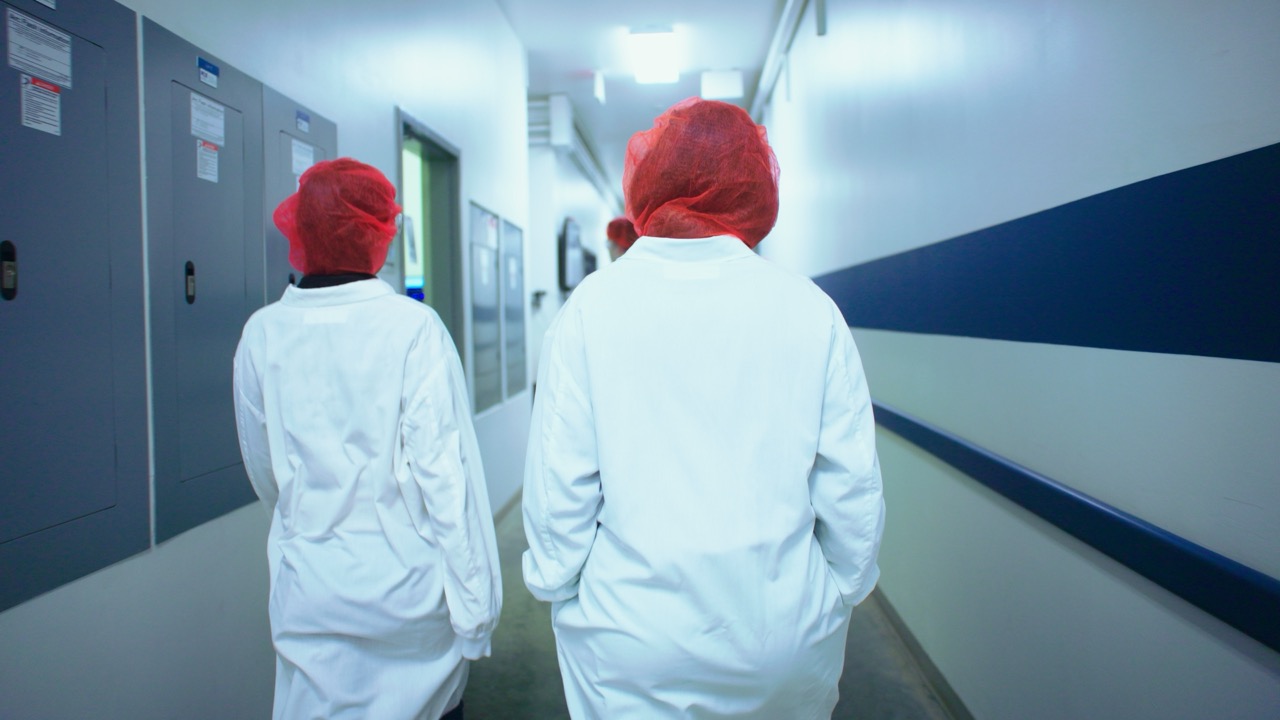
Integrated compliance reporting is non-negotiable when evaluating cannabis cultivation management software - errors or gaps in state reporting can mean audits, fines, or worse. Bi-directional, real-time sync between your cultivation platform and the state-mandated reporting system, with automatic handling of downtime, is what actually closes the gap between operations and compliance.
Historical harvest data is what allows an operation to genuinely improve cycle over cycle. Without it, teams tend to repeat whatever worked, or didn't, last time, without a clear answer as to why. That data also needs to be stored securely and access-controlled by role, since batch-level yield and cost data is sensitive operational information you don't want exposed beyond the people who need it. Just as important is how it's presented: raw historical records are only useful if the system lays them out clearly, by strain, room, or input, so a cultivation manager can spot a trend and act on it, rather than exporting spreadsheets to piece the story together themselves.
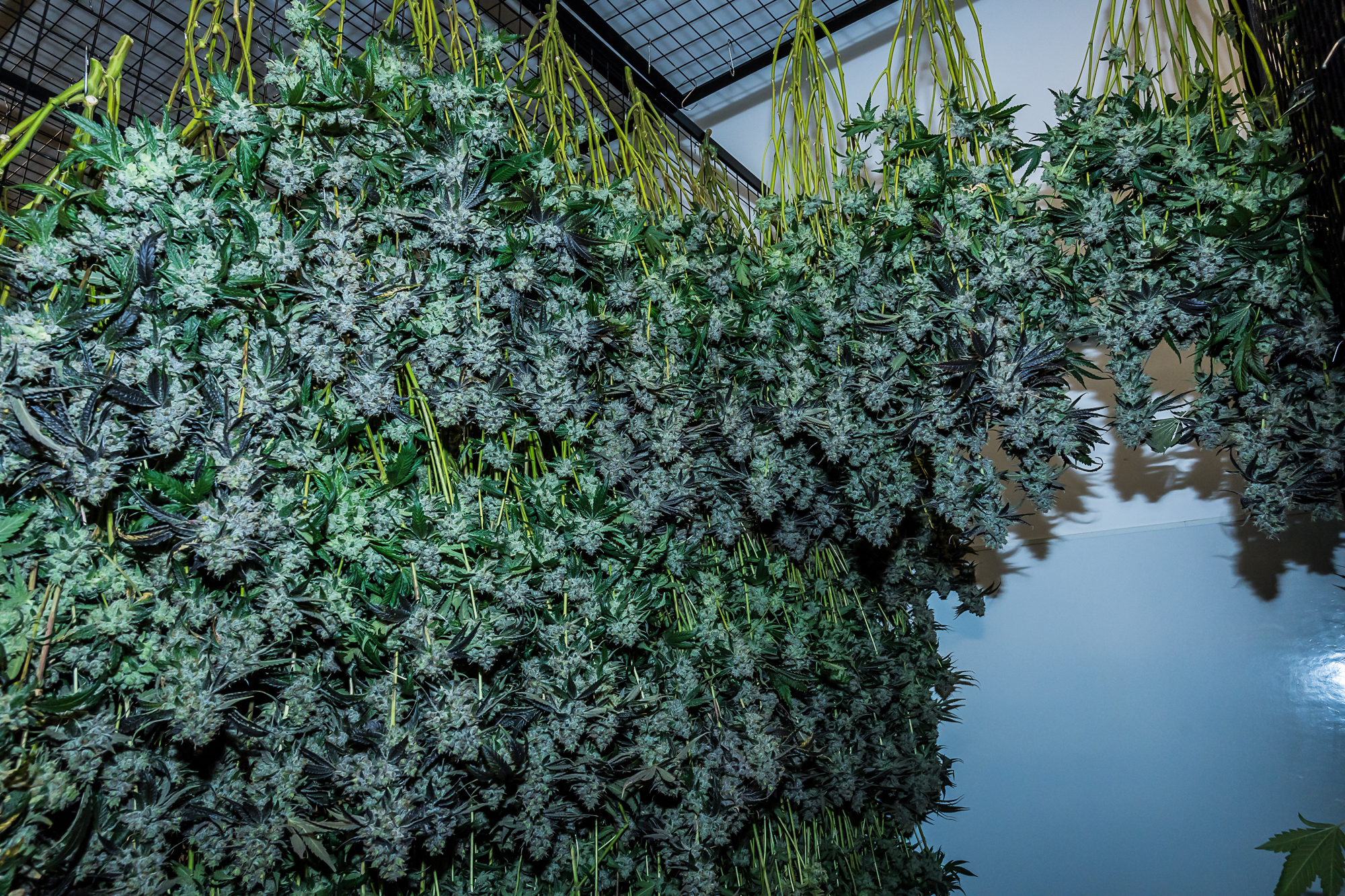
Cultivation happens on the floor, not at a desk. Task management, environmental monitoring, and plant movement should be executable from a phone or tablet, ideally with offline capability for facilities with inconsistent connectivity. When a plant count, weight, or environmental reading is logged the moment it happens, rather than written on a clipboard and entered into a system hours later, you eliminate an entire category of transcription errors.
Harvest isn't the end of the data trail. Whatever happens to that product next, inventory, testing, sales, financial reporting, should draw from the same system rather than requiring cultivation data to be re-entered into a second platform.
Historically, cultivators have had to choose between depth and integration. A specialist cultivation platform delivers real agronomic functionality, environmental data, crop steering, cultivar-specific workflows, but typically requires a separate system for inventory, sales, and accounting once product leaves the flower room. A general-purpose cannabis ERP delivers the reverse: strong business-side functionality, with cultivation treated as a secondary module rather than a core capability.
The cost of that tradeoff isn't always obvious until you're living with it. Data that should be connected, environmental conditions and yield outcomes, labor hours and COGS, harvest weights and finished inventory, ends up split across systems that don't communicate. Someone on the team becomes the integration layer, manually reconciling data that should already match. That's expensive labor spent on a problem software should have solved.
The right answer isn't choosing between a cultivation specialist and a business platform. It's a system that provides both without the seam between them.
In January 2026, Canix, the leading ERP platform for cannabis operators, acquired Trym, a best-in-class cultivation management platform built specifically for commercial growers. The acquisition came at a pivotal moment for the industry: as consolidation accelerates and operators look for fewer, deeper vendor relationships instead of stitching together point solutions, a single platform capable of managing a business from clone to sale has become significantly more valuable.
Shortly after the acquisition, Canix launched Canix Mobile, bringing Trym's mobile plant management capabilities natively into the Canix platform, so cultivation teams can manage plants, and compliance actions from a phone or tablet without leaving the core system. Task and workflow management is the next major piece planned for integration, with environmental sensor data expected to follow.
Most cultivation software implementations take two to six weeks, depending on the complexity of the operation. A single-site cultivator will typically move faster than a multi-facility or multi-state operator managing several license types at once. Before go-live, existing operational data, active batches, current task templates, and historical environmental or yield records, needs to be migrated into the new system. A good implementation team treats this as a structured, guided process rather than something left to the operator to figure out.
The strongest go-lives are phased. Most cultivators start by establishing live plant and batch tracking as a single source of truth, then layer in task automation, and reporting once the team is confident in the core system. This limits risk on day one and gives staff time to build trust in the platform before adding complexity.
Training typically splits into two tracks. Floor-level staff working directly in the system day to day generally ramp up quickly, since the workflows are built to mirror how cultivation actually happens. Admin-level training, covering Metrc configuration, reporting, and analytics setup, takes longer, but it's where most of the long-term operational value is unlocked. Canix supports this with a dedicated help center, knowledge base, and structured courses through its learning management system, so teams have resources to reference well beyond initial onboarding.

Canix is a cannabis ERP built to solve the operational challenges specific to the regulated cannabis industry, refined over years of direct feedback from cultivators, manufacturers, and distributors nationwide. Following the acquisition of Trym, Canix is actively building toward purpose-built cultivation management from first planting through packaging, with mobile plant management already live and task and environmental integration on the roadmap.
Mobile plant management, built in. Canix Mobile brings Trym's mobile plant tracking and task visibility directly into the core Canix platform, so cultivation teams can manage the floor from a phone or tablet without a separate app.
Metrc integration that actually works. Two-way, real-time sync means actions taken in cultivation push to Metrc automatically. When Metrc experiences downtime, Canix queues submissions and syncs them once the system recovers, with no manual retry required.
Cultivar-specific task automation, coming next. Trym's task and workflow scheduling is the next major capability planned for integration into Canix, building toward the same cultivar-specific automation Trym customers rely on today.
One platform from clone to sale. Inventory, COGS and financial reporting, sales, and compliance across every license type run in the same system as the grow itself, with cultivation-specific functionality expanding as the Trym integration progresses.
Book a demo to see Canix and Trym's cultivation management in action →
What is cannabis cultivation management software? Cannabis cultivation management software is a purpose-built platform for running the operational side of a commercial grow, including plant lifecycle tracking, environmental monitoring, task and labor management, and yield analytics, while integrating with state-mandated compliance systems like Metrc.
Is cultivation software different from Metrc? Yes. Metrc is a state-mandated track-and-trace system built for regulatory reporting. Cultivation management software is built for the operational side of running a grow, and typically integrates with Metrc so compliance reporting happens automatically rather than as a separate task.
Do I need separate software for cultivation and the rest of my business? Not necessarily. Many operators have historically used a specialist cultivation tool alongside a separate ERP for inventory, sales, and accounting. Platforms that combine both remove the need to reconcile data between two systems.
How much does cannabis cultivation management software cost? Pricing typically scales with facility size, canopy, and feature set rather than a flat rate. Most vendors price around license type and operational scale, so it's worth requesting a custom quote based on your specific operation rather than comparing sticker prices across providers.
Does cultivation software work for outdoor and greenhouse grows, or only indoor? Strong cultivation management platforms support indoor, greenhouse, and outdoor operations, though the depth of environmental sensor integration can vary by grow type. It's worth confirming directly with a vendor how their platform handles your specific cultivation method.
The cannabis industry in 2026 is more competitive, more margin-sensitive, and less forgiving of operational inefficiency than it has ever been. In a market where wholesale prices continue to fall and labor absorbs most of the pressure, the cultivation operations pulling ahead are the ones that have replaced manual, disconnected workflows with accurate, real-time data covering their plants, their environment, and their compliance standing.
Cannabis cultivation management software provides that foundation, and when it's built into a full cannabis ERP, it removes the handoff between growing the product and running the business around it.
For operators evaluating their options, the right platform will depend on facility type, state compliance requirements, and how much of the business beyond cultivation you need the system to support.
Subscribe to our newsletter.


The future of cannabis technology
.png)